
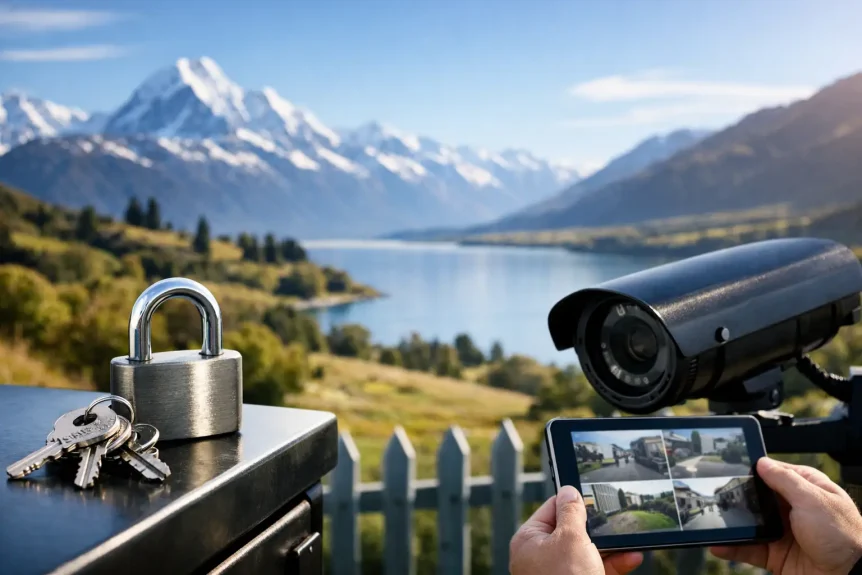
A loading dock left unmonitored after hours, a vacant commercial floor, a poorly controlled contractor entrance or a high-value item moving between sites can create exposure well before a loss occurs. Effective asset protection services address these weak points before they become theft, damage, disruption, safety incidents or reputational harm.
For New Zealand businesses and organisations, asset security and protection is not simply about placing a security guard at a gate. It is the disciplined management of people, access, information, property and operational risk. The right protection model makes legitimate activity easier to manage while making unauthorised activity harder to conceal, execute or repeat.
What asset security and protection services should achieve
Assets take many forms. They may be physical stock, plant, vehicles, tools, critical infrastructure and sensitive equipment. They may also include confidential records, intellectual property, access credentials, operational continuity and the confidence of staff, tenants, customers and stakeholders.
A professional security programme protects more than the item with a dollar value attached. It protects the ability to operate without avoidable interruption. For a distribution facility, that may mean controlling vehicle movements and reducing stock loss. For a corporate office, it may involve managing visitor access, protecting confidential spaces and responding appropriately to concerning behaviour. For a construction project, the priority may be securing equipment, materials and site boundaries outside working hours.
The difference matters. A basic security guard arrangement can provide a visible presence, but visibility alone does not necessarily resolve a known vulnerability. Sophisticated asset protection begins with an understanding of what could happen, where it could occur, who may be affected and what response is required.
Start with the risk, not the roster
Security coverage is often commissioned after an incident: a break-in, repeated vandalism, internal loss or an unacceptable confrontation. Those events demand action, but deploying personnel without first examining the risk can produce an expensive solution that treats the symptom rather than the cause.
A credible assessment considers the site layout, operating hours, public access, workforce patterns, contractor activity, incident history, asset value and local threat environment. It should also identify the points where processes fail. A locked gate is of limited value if access cards are shared, deliveries are not verified or alarm activations are not followed by a defined response.
This assessment informs the operational design. Some sites require static guarding at a critical access point. Others are better served by mobile patrols, monitored access control, security concierge personnel or a combination of physical presence and electronic systems. The correct model depends on the assets, the threat profile and the consequence of a failure.
Cost has a place in that decision, but it should not be the only measure. Reducing hours can appear efficient until a predictable gap becomes the point of loss. Equally, full-time guarding may be disproportionate where risk is low and technology, patrols and improved processes provide sufficient control. The objective is proportionate protection with clear accountability.
Asset security and protection services require capable security personnel
Security personnel are often the first to notice a change in normal conditions: an unfamiliar vehicle near a restricted area, a door that should be secure, a contractor acting outside authorised hours or an individual testing staff boundaries. Recognising the detail is one skill. Knowing how to verify, communicate and respond without escalating risk is another.
For this reason, personnel selection, training and supervision are central to service quality. Security guards protecting commercial assets need more than a uniform and a site brief. They require sound judgement, professional communication, accurate reporting, situational awareness and confidence working within defined legal and client protocols.
Government licensing by the PSPLA under the Private Security Personnel and Private Investigators Act 2010 is a fundamental baseline in New Zealand. Beyond compliance, decision-makers should consider whether the provider has the operational depth to manage difficult incidents, maintain consistent standards and provide clear oversight. A security guard who understands the client’s business, escalation procedures and operating environment is far more effective than a disconnected presence on site.
The strongest security and protection teams are visible when deterrence is needed and discreet when business continuity, client privacy or executive activity demands a lower profile. That balance is especially important in premium retail, corporate environments, hospitality venues, infrastructure sites and high-profile private engagements.
Intelligence turns incidents into useful information
A single incident report can be useful. A pattern of reliable reports can reveal a problem that needs intervention. Repeated attempts at unauthorised access, stock discrepancies associated with a particular time window, recurring antisocial behaviour or unusual contractor movements may indicate a broader vulnerability.
This is where intelligence-led security adds value. Information collected by frontline personnel should be recorded accurately, assessed in context and used to refine the protection plan. If a recurring issue is identified, the response might involve changing patrol timings, improving lighting, tightening access procedures, reviewing staff protocols or conducting a more focused investigation.
Private investigation capability can be particularly relevant where internal theft, fraud, misconduct or targeted loss is suspected. These matters require discretion and procedural care. Assumptions, informal accusations and poorly handled enquiries can expose an organisation to reputational, employment and legal risk. A properly managed investigation establishes facts, preserves relevant information and supports informed decision-making.
Technology works best with operational discipline
CCTV, alarms, access-control systems, analytics and remote monitoring can materially improve asset protection. They provide coverage beyond the line of sight, create records of activity and can trigger earlier intervention. However, technology does not remove the need for capable people and sound procedures.
A camera that is poorly positioned, an access system with outdated permissions or an alarm response plan that nobody has tested can create a false sense of security. Technology must be maintained, monitored and incorporated into daily operations. Staff also need to understand their responsibilities: challenging unauthorised access where appropriate, reporting faults promptly and avoiding practices that defeat the system’s purpose.
There are trade-offs. More surveillance may improve oversight but must be managed with respect for privacy and workplace expectations. Tighter access controls can reduce risk but may inconvenience staff and visitors if the process is poorly designed. The best approach protects the site without creating unnecessary friction for legitimate users.
Prepare for the moment prevention fails
No security environment is entirely risk-free. The measure of a protection programme is also how it performs when an incident occurs. A delayed, confused or inconsistent response can turn minor loss into significant operational disruption.
Asset security and protection plans should define who is contacted, what information is recorded, when emergency services are engaged and how the site is secured afterwards. They should account for situations ranging from trespass and theft through to aggressive behaviour, property damage, suspicious packages, unauthorised protests or threats against personnel.
Post-incident action is equally important. Evidence may need to be preserved, access permissions reviewed, affected staff supported and clients or insurers provided with accurate documentation. The incident should then be assessed for lessons, not simply closed once the immediate issue has passed.
For organisations with multiple sites or complex operating hours, consistency is essential. A response standard that exists only in a manager’s memory is not a dependable control. Documented procedures, professional reporting and accountable supervision provide the operational discipline needed across locations, shifts and changing personnel.
Choosing an asset protection partner
When comparing asset security and protection services, look beyond the hourly rate and the number of security guards offered. Ask how the provider assesses risk, recruits and vets personnel, supervises deployments, manages incident escalation and reports on performance. Examine whether it can combine guarding with risk management, investigations, personal protection or event security when circumstances change.
Experience in sensitive and complex environments matters because asset protection is rarely static. A routine site can become high risk after a dispute, a public event, a change in operating hours or a threat to a senior leader. Security providers with capable leadership, Government (PSPLA) licensed security personnel and established operational processes are better positioned to adapt without compromising standards.
TNG Security Limited and The Neill Group (TNG) brings trained personnel, intelligence capability, high-level security and risk-management discipline together for clients who require more than a conventional security guard service. The focus is on measured planning, discreet delivery and absolute precision when conditions demand a response.
The most useful first step is to identify the asset or activity that would cause the greatest disruption if compromised, then examine the pathway someone could use to reach it. That practical exercise often reveals where stronger control, better information or a professional security and protective presence will make the greatest difference.