
A credible threat rarely arrives as a single, obvious warning. It develops through small indicators: an escalating grievance, repeated unwanted contact, unusual reconnaissance, hostile online commentary or a staff member whose behaviour has shifted under pressure. Protective intelligence trends are changing how capable organisations identify those indicators early, assess their relevance and act before disruption becomes harm.
For New Zealand businesses, venues, public-facing organisations and high-profile individuals, the standard is moving beyond a visible security presence. Guards, access control and personal protection remain essential controls, but they are most effective when informed by disciplined intelligence, proportionate risk assessment and a clear operational response.
Protective intelligence trends moving from reaction to prevention
Protective intelligence is the structured collection, assessment and management of information relevant to threats against people, assets, operations and reputation. Its purpose is not to predict the future with certainty. It is to reduce uncertainty sufficiently for decision-makers to take timely, defensible action.
The strongest programmes do not treat every concern as an emergency. They distinguish between noise, concern and credible risk. That requires trained judgement, reliable reporting pathways and the ability to connect information from physical security, investigations, staff observations, open-source material and incident records.
This shift matters because many threats now cross traditional boundaries. A hostile social-media post may lead to an unwanted approach at a workplace. A disgruntled former contractor may exploit information obtained through a cyber incident. A crowd-management issue at an event may be influenced by online misinformation, targeted harassment or a developing protest. Treating each issue in isolation leaves gaps that sophisticated risk management is designed to close.
Intelligence-led threat assessment is becoming operational
Threat assessment is increasingly being embedded into everyday protective operations rather than reserved for a major incident. Security teams are expected to understand who may be at risk, what may motivate a person of concern, how accessible the target is and which interventions are justified.
This is especially relevant for executives, public-facing staff, elected representatives, healthcare personnel, event talent and teams managing contentious commercial or regulatory matters. The question is no longer simply whether a threat has been made. It is whether a pattern of behaviour demonstrates intent, capability, fixation, access or escalation.
A careful assessment can support practical measures such as adjusting arrival and departure arrangements, improving visitor protocols, briefing reception personnel, reviewing residential exposure, coordinating with venue management or engaging police where thresholds are met. The response should be proportionate. Overreaction can create unnecessary anxiety and operational friction; underreaction can leave people exposed.
Open-source intelligence requires professional discipline
Publicly available information can reveal emerging risks quickly. Social platforms, online forums, media coverage, public records and digital mapping can all assist a protective assessment. However, access to information does not automatically make its collection, interpretation or use appropriate.
One of the most significant protective intelligence trends is a greater focus on lawful, ethical and auditable open-source intelligence. Organisations need clear authority, defined collection requirements, secure handling practices and experienced analysts who can test information rather than merely repeat it.
Online material is frequently incomplete, anonymous or deliberately provocative. A threat assessment built on a screenshot alone can be unreliable. Analysts must consider source credibility, context, corroboration, timing and whether language represents genuine intent, grievance-driven venting or coordinated manipulation.
For private clients and corporate leaders, discretion is equally important. Intelligence activity must protect privacy while reducing exposure. The objective is informed protection, not intrusive surveillance for its own sake.
Physical and digital risk are now assessed together
The division between cyber security and physical security is becoming less useful in practical risk management. A compromised account can expose travel plans, home locations, staff contact details or event logistics. A physical intrusion can provide access to devices, documents or restricted operational information.
Protective intelligence should therefore draw on relevant cyber indicators without attempting to duplicate specialist cyber response. Security leaders benefit from a shared picture: which information could increase personal exposure, which personnel have been targeted online, whether impersonation is occurring, and whether an online threat has a plausible physical pathway.
For example, an executive protection plan may need to account for publicly visible meeting locations, geotagged images, leaked itineraries and the use of unauthorised vehicles or couriers. At a commercial property, access anomalies, attempted credential misuse and abnormal visitor behaviour may need to be considered alongside phishing activity or data theft reports.
The operational principle is straightforward: information should reach the people responsible for protecting the target in time to matter. That requires agreed escalation channels, careful information classification and a command structure that does not allow critical details to stall between departments.
Insider risk is receiving more attention
Insider risk is not limited to deliberate misconduct. It may involve a dissatisfied employee, an individual under personal or financial strain, poor access discipline, misplaced loyalty or someone manipulated by an external actor. In many cases, the earliest warning signs are behavioural and operational rather than technical.
Protective intelligence programmes are increasingly combining security incident data with human-centred reporting. Changes in conduct, boundary testing, unusual interest in restricted areas, repeated policy breaches and concerning communications should be recorded and assessed fairly. A single observation may mean little. A developing pattern can require intervention.
This area demands exceptional care. Organisations must avoid turning normal workplace stress or disagreement into suspicion. Clear policies, respectful reporting processes and appropriate human resources involvement are essential. The aim is to manage risk while preserving fairness, confidentiality and organisational trust.
AI can accelerate analysis, but not replace judgement
Artificial intelligence is beginning to assist with large volumes of reporting, open-source monitoring, translation, trend detection and the identification of repeated names, locations or themes. For large estates, major events or organisations receiving significant communications, this can reduce the time needed to surface relevant material.
Its limitations are equally clear. AI can misread tone, miss cultural context, amplify poor-quality data or produce confident but unsupported conclusions. It should not determine whether an individual poses a threat, nor should it replace a trained investigator or protective intelligence practitioner.
The appropriate model is human-led analysis supported by technology. Experienced personnel set the intelligence requirement, validate sources, assess behaviour, document decision-making and recommend measured action. Technology can improve speed; professional judgement protects accuracy and accountability.
Event and travel intelligence is becoming more dynamic
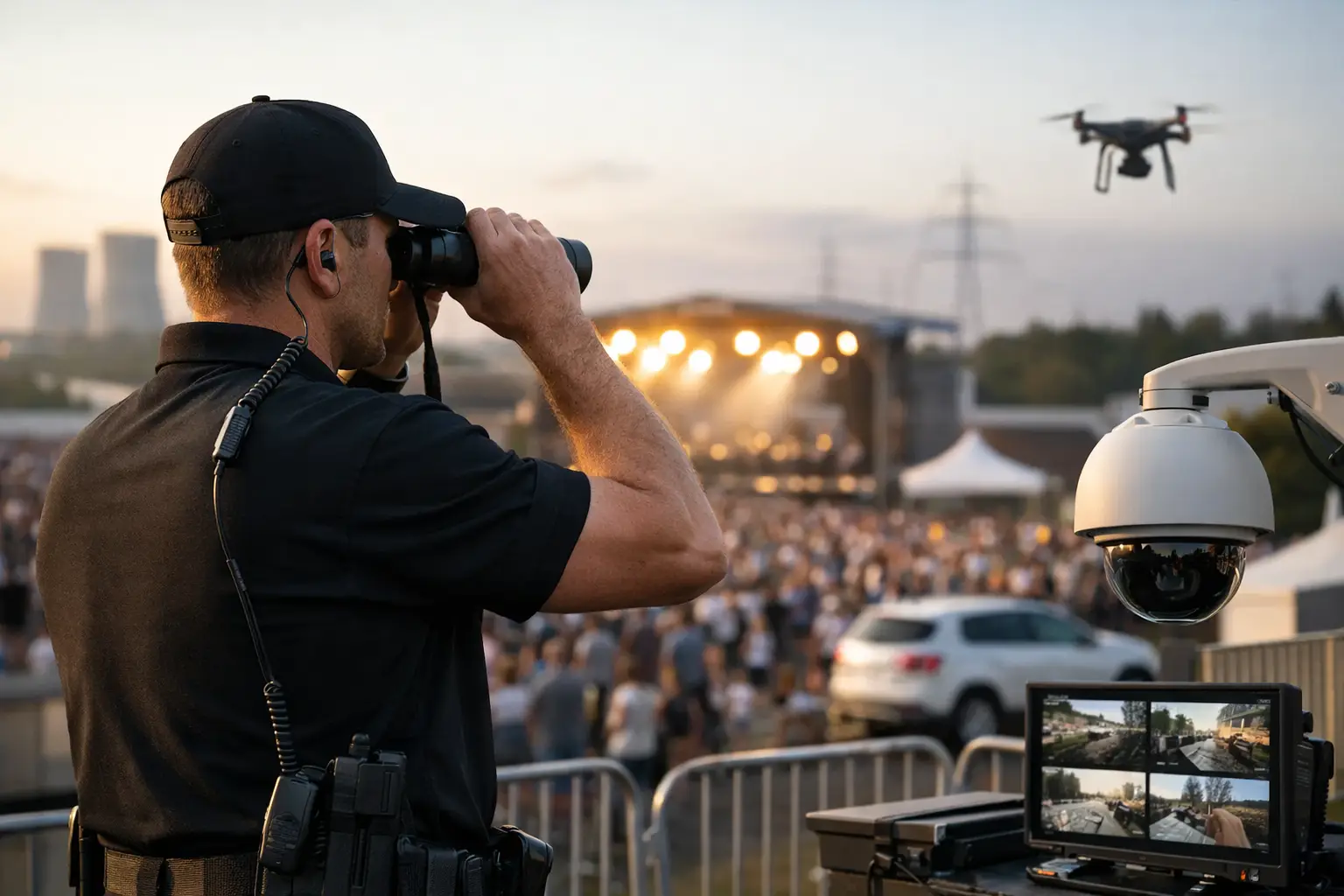
Static security plans are increasingly inadequate for high-profile events, touring talent, executive travel and large public gatherings. Conditions can change quickly through weather, transport disruption, protest activity, crowd sentiment, media attention or targeted online discussion.
Protective intelligence supports a more dynamic approach. Before an event, teams can assess venue access, local sensitivities, likely protest or disruption drivers, exposure points and emergency egress considerations. During operations, intelligence updates can inform deployment changes, movement timing and stakeholder briefings.
For personal protection assignments, advance work remains fundamental. A well-managed itinerary considers public exposure, accommodation, transport, entry and exit points, medical contingencies, local capability and the client’s need for privacy. The best protective operation is often barely noticed because it anticipates pressure points before they affect the client experience.
What capable organisations should do next
Organisations do not need a large internal intelligence unit to improve their position. They do need a disciplined process. Begin by identifying the people, sites, events and operations where disruption would have the greatest impact. Establish a clear method for staff to report concerns, and ensure reports are assessed by personnel with the authority and expertise to determine next steps.
Risk information should be recorded consistently, protected appropriately and reviewed for patterns. Security, people and culture, legal, facilities, cyber and executive stakeholders may each hold part of the picture. Their responsibilities should be defined before an incident creates urgency.
External support is particularly valuable where a matter involves a high-profile individual, a sensitive workplace allegation, hostile communications, complex travel, suspicious activity, persistent unwanted contact or a requirement for discreet investigation. In these circumstances, fragmented advice can create confusion. Integrated protective intelligence, investigation, planning and frontline security provide greater operational control.
TNG Security applies this intelligence-led approach through vetted professionals, sophisticated handling and uncompromised standards across protective, investigative and risk-management assignments. The appropriate response will always depend on the threat, the client’s profile and the operational environment.
The most useful protective intelligence is not the largest volume of information. It is the assessed, relevant insight that enables the right person to make the right protective decision before the risk gains momentum.
Latest Posts
Aug. 22, 2026
When Are Security Guards Required in New Zealand?

Aug. 22, 2026
Bodyguard Versus Executive Protection Services
Aug. 22, 2026
Security for Events That Protects More Than People

Aug. 22, 2026
When Security Consultants Become Essential
Aug. 21, 2026