
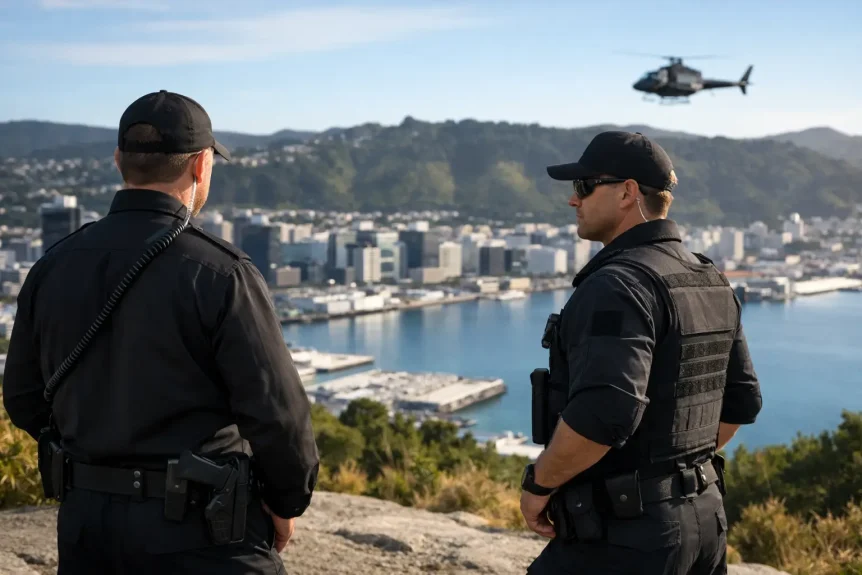
A security presence at a Wellington site needs to do more than stand at a door. It must account for busy public access points, changing weather, after-hours activity, high-value assets, staff safety and the reputational consequences of an incident handled poorly. Wellington security guards are most effective when they operate as part of a clear protection plan, not as an isolated front-of-house measure.
For property owners, event organisers and corporate leaders, the question is not simply whether security is required. It is what level of risk exists, where it may emerge, and whether the assigned personnel have the judgement, authority and operational support to respond with control. A professional security deployment should prevent disruption where possible and manage it with absolute precision where prevention is no longer an option.
What Wellington Security Guards Need to Manage
Wellington presents a distinctive operating environment. Commercial buildings may have multiple public entrances, shared tenancy areas and underground car parks. Events can move quickly from a controlled guest list to an exposed public environment. Government-adjacent organisations, corporate offices and critical sites may also require a greater level of discretion than a standard guarding arrangement can provide.
The risks are rarely limited to theft or trespass. Security personnel may need to manage aggressive behaviour, unauthorised access, workplace concerns, protest activity, suspicious conduct, welfare incidents or an emergency evacuation. Each situation calls for calm communication, disciplined escalation and detailed reporting. The visible guard is only one component of the protection outcome.
A Visible Presence Is Not the Whole Service
A uniformed officer at reception can be a valuable deterrent, but deterrence is not a complete security strategy. The quality of the person, their instructions and the management behind them determine whether that presence genuinely safeguards an organisation.
Licensing, judgement and presentation
Security personnel should be appropriately licensed under New Zealand’s Private Security Personnel and Private Investigators Act 2010. Licensing is a baseline, not the final measure of capability. Clients should also expect officers who are vetted, professionally presented, trained for their role and capable of dealing with people respectfully under pressure.
For a corporate office, this may mean managing visitor access without making clients or staff feel scrutinised. At a venue, it may mean applying entry conditions fairly while recognising early signs of conflict. At a sensitive site, it may mean noticing behaviour that does not fit the normal pattern and escalating it through the right channels.
Operational management behind the officer
A guard working alone without clear site instructions, supervision or incident support is limited in what they can deliver. Strong security operations include site-specific procedures, defined communications, shift handovers, reporting standards and a management team able to make decisions when conditions change.
This matters after an incident as much as during one. A vague report may leave an organisation unable to understand what happened, identify repeat concerns or take defensible action. Accurate records, timely escalation and a controlled response protect operational integrity and give decision-makers useful information rather than uncertainty.
Designing the Right Deployment for the Risk
There is no single model for Wellington security guards because the appropriate deployment depends on the site, the people and the consequence of a failure. Over-resourcing a low-risk environment can be inefficient. Under-resourcing a high-risk one can create avoidable exposure.
Commercial property and asset protection
Commercial property security commonly requires a mix of access control, concierge-style reception duties, patrols, alarm response and after-hours checks. The officer needs to understand which areas are public, which are restricted and what constitutes unusual activity at different times of day.
The best approach considers the whole property cycle. Morning access, contractor arrivals, deliveries, tenant movement, closing procedures and overnight vulnerability each create different requirements. A well-managed programme can reduce opportunities for theft, trespass and damage without turning a professional workplace into an unnecessarily hostile environment.
Events, venues and crowd management
Event security is a live operation. Guest behaviour, queue pressure, alcohol service, artist movements, weather disruption and emergency access can all alter the plan within minutes. Crowd control requires confident communication and sound judgement, not confrontational posturing.
An experienced event team works from agreed entry criteria, emergency procedures, venue rules and clear responsibilities. It also understands when a discreet intervention is preferable to a public removal. For private functions, corporate events and high-profile appearances, the ability to protect the atmosphere is often as important as protecting the physical space.
Executive care and personal protection
For executives, public figures and high-net-worth clients, the requirement may extend beyond a static location. Personal protection must fit travel schedules, public engagements, accommodation, family considerations and privacy expectations. It needs to be alert without becoming intrusive.
This is where security planning, intelligence awareness and operational logistics become essential. The objective is not to create spectacle. It is to identify exposure early, manage movement securely and allow the client to continue their programme with confidence.
Questions to Ask Before Appointing a Provider
A security proposal should be assessed on more than hourly rates and headcount. The lowest-cost arrangement can become expensive when officer turnover, poor supervision or weak incident handling exposes a business to loss, interruption or reputational damage.
Before appointing a provider, decision-makers should ask:
- Are the personnel properly licensed, vetted and selected for this specific environment?
- Who supervises the team, and what support is available outside normal business hours?
- Will the provider complete a site assessment and produce clear operating instructions?
- How are incidents recorded, escalated and reviewed with the client?
- Can the provider add investigation, risk management or personal protection capability if circumstances change?
The answers reveal whether a company is offering basic manpower or a professionally managed protective service. They also help clarify expectations before an incident tests the arrangement.
When Integrated Security Makes the Difference
A theft pattern, employee concern or repeated access-control failure may not be solved by adding another officer to a shift. It may require an investigation, a review of site procedures, intelligence gathering, technical recommendations or a change in how contractors and visitors are managed.
That is why integrated capability matters. Security guarding should connect with risk assessment, private investigation, personal protection and operational planning where required. TNG Security brings these disciplines together through government-licensed personnel and a service model designed for sophisticated risk handling, including deployments that require discretion, specialist planning and experienced operational oversight.
Not every Wellington organisation needs an extensive security operation. A small office may need reliable after-hours patrols and a clear response process. A major venue, infrastructure site or high-profile event may need layered protection, senior command oversight and contingency planning. The standard should remain uncompromised in either case: the deployment must match the risk, be professionally managed and produce confidence for those relying on it.
Security is strongest when it becomes a quiet source of operational control. The right team allows staff to work, guests to arrive and assets to remain protected without unnecessary disruption. Start with an honest assessment of exposure, then appoint Wellington security guards who can manage the reality behind the brief, not just occupy the position.