
A security incident rarely begins when an alarm activates or a confrontation occurs. It begins earlier, when a site has unclear access rules, an event plan leaves gaps between teams, sensitive information is handled casually, or a known concern is accepted as “business as usual”. Security consulting addresses those conditions before they become operational loss, personal harm or reputational damage.
For organisations responsible for people, property, assets or public-facing operations, the value is not simply more guards or more technology. It is a clear understanding of what requires protection, where exposure exists, who is accountable, and what practical controls will hold under pressure.
What Security Consulting Is Designed to Achieve
Security consulting is the disciplined assessment and design of protective measures for a specific environment. It combines risk analysis, operational planning, physical security review, personnel considerations and incident preparedness. The objective is proportionate control – strong enough to manage credible threats, yet practical enough for staff, tenants, visitors and customers to follow every day.
A warehouse, corporate office, construction site and entertainment venue may all need access control, incident reporting and trained personnel. Their risks are not interchangeable. A distribution facility may be vulnerable to theft, unauthorised vehicle access and after-hours intrusion. A corporate office may need to manage executive exposure, confidential information and visitor movement. A venue may need to maintain public safety while handling intoxication, crowd behaviour and rapid changes in attendance.
The first task is therefore not to prescribe a standard package. It is to establish the operating reality: the people on site, the hours of activity, critical assets, existing controls, recent incidents, likely threat actors and the organisation’s tolerance for disruption.
A Clear Picture of Risk Before Resources Are Deployed
Quality advice begins with facts rather than assumptions. Consultants examine how a location or operation actually functions, including informal workarounds that may not appear in written procedures. This can involve site inspections, interviews with leadership and frontline staff, review of incident records, observation of access points, and assessment of supplier or contractor arrangements.
The result should distinguish between a vulnerability and a genuine priority. An unlocked secondary door is a vulnerability. Its priority depends on what it provides access to, how often it is exposed, whether it is monitored, and what an intruder could do once inside. This distinction prevents organisations from spending heavily on visible measures that do little to reduce meaningful risk.
A sound assessment also considers the consequences of failure. Loss may be financial, but it can also involve injury, service interruption, privacy breaches, regulatory scrutiny or damage to stakeholder confidence. For government-adjacent organisations, critical infrastructure operators and high-profile clients, even a contained incident can create wider consequences if communication and decision-making are not controlled.
Where Security Consulting Delivers the Greatest Value
Consulting is particularly valuable when an organisation is changing, expanding or responding to uncertainty. A new facility, a major event, a workplace dispute, a high-value asset movement or a period of increased public attention can all alter the risk profile quickly.
For property owners and managers, a review may establish a better approach to building access, tenant safety, contractor control, patrol patterns, CCTV coverage and incident escalation. The goal is not to turn a commercial property into a fortress. It is to make unauthorised activity difficult, observable and promptly actionable while preserving a professional experience for legitimate occupants.
For event organisers, planning must extend beyond the number of security personnel at the gate. Entry screening, credential control, queue management, emergency access, artist or executive movements, alcohol-related risk, communications and post-event egress must work as one operation. A well-staffed event can still fail if roles are vague or intelligence is not passed quickly to the people making decisions.
For corporate leaders and private clients, the focus may include travel, public appearances, workplace threat management, residential considerations and discreet executive care. The appropriate posture depends on the person’s profile, the nature of the concern and the practical need to continue working or appearing in public. Highly visible protection can deter some threats, but it can also draw attention. In other circumstances, low-profile planning and trained close protection personnel are the better fit.
From Assessment to an Operating Security Plan
A report alone does not improve security. The critical work is translating findings into a plan that assigns responsibility, sets priorities and can be implemented without confusion.
The strongest plans usually combine physical, procedural and human controls. Physical measures may include locks, lighting, perimeter improvements, alarms, CCTV and access systems. Procedures define who can enter, how visitors are recorded, when incidents are escalated and who has authority to make decisions. Human controls cover recruitment, training, supervision, security presence and the discipline to follow established processes.
These controls should support each other. CCTV without active review can become evidence of an incident rather than a means of preventing one. A visitor policy is ineffective if reception staff have no authority to challenge exceptions. A guard presence loses value if officers do not receive site-specific instructions, current intelligence or clear escalation pathways.
Prioritisation matters. Some recommendations require capital investment and lead time, such as redesigning a loading area or installing integrated access control. Others can begin immediately, including key-register discipline, revised opening and closing procedures, staff briefings or a clear incident log. A capable consultant separates urgent actions from longer-term improvements and explains the reasoning behind each.
The Advantage of Integrated Security Capability
Security advice is more useful when it can be tested against frontline reality. Consultants who understand guarding operations, investigations, personal protection and event management can identify whether a proposed measure will work at 2 am, during a crowded arrival period or when an incident requires discretion.
This is where integrated capability becomes decisive. An investigation may reveal internal theft patterns that require changes to access permissions and staff processes. A security review may identify a targeted risk requiring temporary personal protection. An event assessment may lead to a revised crowd-management plan and a specialist team capable of delivering it. Treating each issue in isolation often creates gaps between strategy and response.
TNG Security brings security consulting together with licensed protective services, private investigation and risk-management capability, allowing clients to move from assessment to controlled implementation with continuity of command. For sensitive engagements, this reduces unnecessary handovers and keeps information within a disciplined operational framework.
Questions Decision-Makers Should Ask
Before commissioning advice, decision-makers should be clear about the outcome they need. Is the concern theft, workplace safety, targeted threats, event disruption, executive exposure or a broader need for resilience? The answer shapes the scope and prevents a generic review from producing generic recommendations.
It is also reasonable to ask how findings will be validated, how sensitive information will be handled, and whether recommendations account for the organisation’s actual budget and operating constraints. Security controls that staff bypass are not controls. The most credible approach is one that accepts practical limitations while refusing to normalise avoidable exposure.
Credentials and experience should carry weight. New Zealand clients should seek appropriately licensed providers, clear governance, vetted personnel and a demonstrated understanding of the relevant environment. High-risk work demands more than a checklist. It requires judgement, confidentiality and the ability to remain composed when conditions change.
Security Is an Operational Discipline
The most effective security arrangements are rarely the most conspicuous. They are evident in controlled access, alert staff, accountable processes, reliable reporting and a response structure that does not depend on improvisation. When a genuine incident occurs, those foundations give leaders options instead of forcing reactive decisions.
A considered security review is often the right first move when a concern has surfaced, a major change is planned or existing measures no longer match the level of risk. Early, precise action protects more than assets – it preserves the confidence and operational integrity on which an organisation depends.
Latest Posts
Aug. 25, 2026
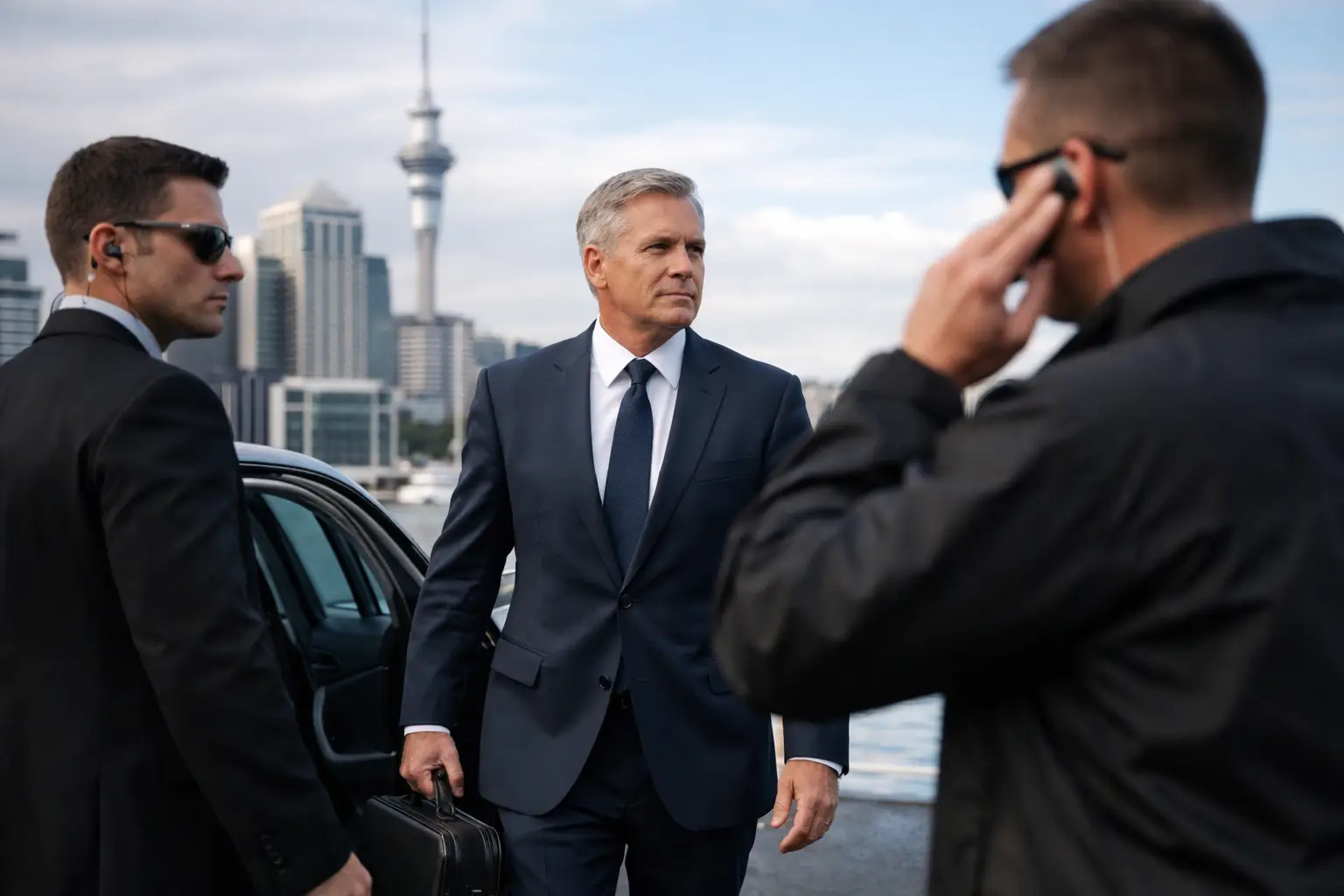
Best Security Protocols for Executives in NZ
Aug. 24, 2026
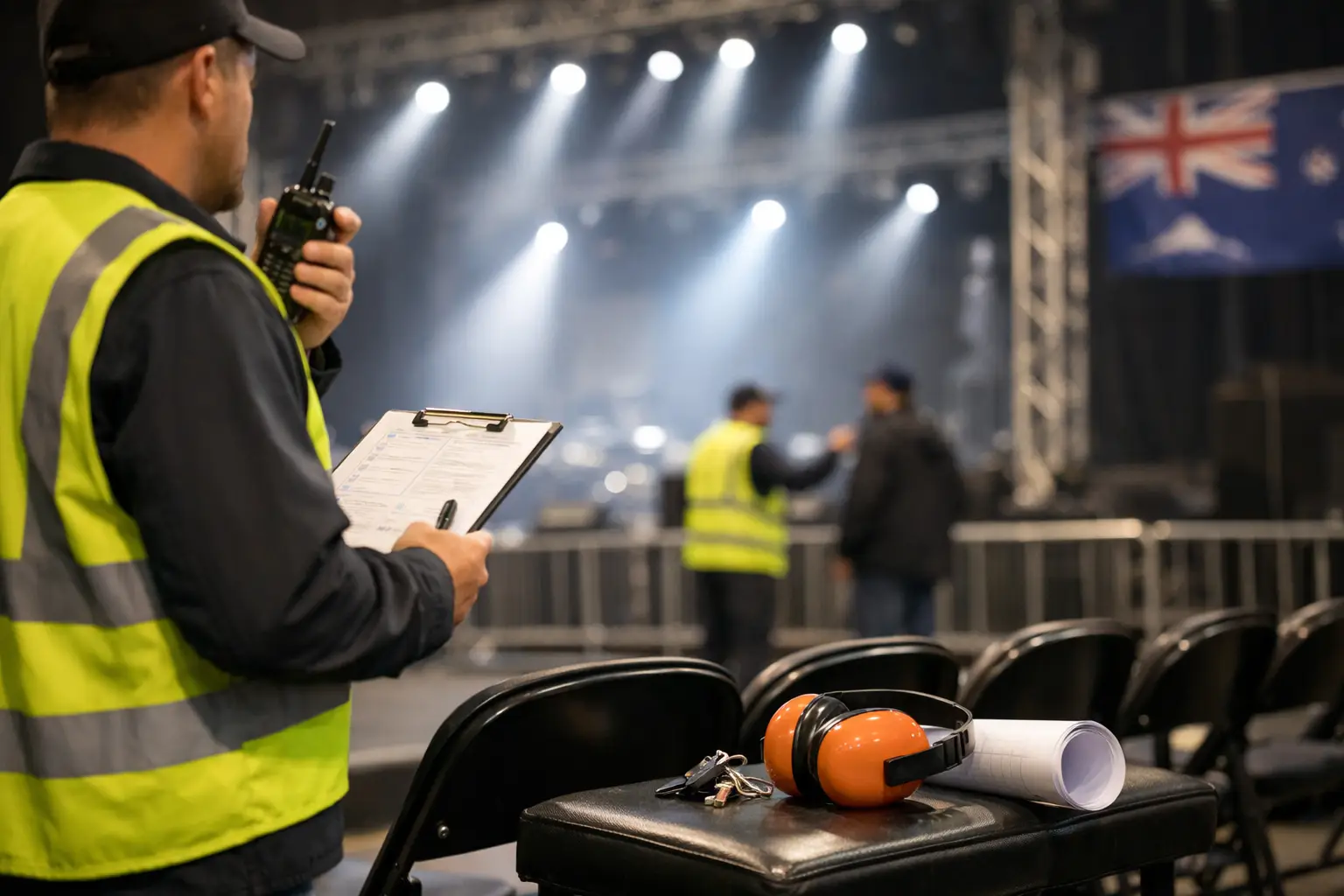
Venue Safety Requirements for New Zealand Events
Aug. 22, 2026
When Are Security Guards Required in New Zealand?

Aug. 22, 2026
Bodyguard Versus Executive Protection Services
Aug. 22, 2026