
A full venue can change character in minutes. A blocked exit, an intoxicated patron, a medical emergency or an aggressive individual at the entry point can quickly affect every person on site. Venue safety requirements are therefore not a box-ticking exercise. They are the operating controls that protect people, preserve business continuity and give venue managers command when conditions shift.
For New Zealand event organisers, hospitality operators, property managers and corporate hosts, the standard required will depend on the venue, crowd profile, activity, alcohol service, location and credible threat environment. A daytime conference for invited guests needs a different posture from a sold-out music event, a high-profile product launch or a late-night licensed venue. The common requirement is clear: safety must be planned, resourced and managed before the first guest arrives.
Venue safety requirements start with risk ownership
The person or organisation controlling the venue cannot outsource accountability simply by hiring security personnel. Under New Zealand health and safety obligations, the party conducting the business or undertaking must identify foreseeable risks and take reasonably practicable steps to manage them. In practical terms, this means knowing who has authority to make decisions, who can stop an activity and who takes command during an incident.
A credible venue plan identifies the risks that are specific to the operation rather than relying on a generic template. Consider crowd numbers and density, entry and exit routes, poor lighting, temporary structures, cash handling, alcohol-related harm, lone staff, vehicle movements, hostile behaviour, medical needs and adverse weather. For a corporate or government-adjacent function, it may also consider unwanted attention, protest activity, sensitive information and the movement of executives or protected guests.
Risk assessment is not about predicting every possible scenario. It is about recognising the scenarios that could cause serious harm or disruption, then setting proportionate controls. A small private function may need discreet access management and an emergency contact structure. A major public event may require dedicated crowd controllers, screening, traffic management, medical support, communications channels and a formal command point.
Build the safety plan around the venue, not the guest list
A venue safety plan should describe how the space will operate under normal conditions and how it will respond when normal conditions fail. It needs to be understood by venue staff, organisers, contractors and security teams – not filed away after a pre-event meeting.
Start with the physical environment. Confirm the approved capacity, access points, emergency exits, evacuation routes, assembly areas, fire equipment, lighting and accessibility arrangements. Ensure exits are not narrowed by furniture, staging, stock, queues or promotional material. Temporary installations deserve particular scrutiny because they can alter sightlines, create trip hazards and restrict movement in ways that are missed during a routine walkthrough.
The plan should also account for the transition periods that often create the greatest exposure: guest arrival, queue build-up, interval periods, alcohol service changes, performer or speaker movements, and the final departure. A venue may appear adequately staffed while guests are settled inside, yet become vulnerable when hundreds of people leave at once into a shared forecourt, car park or public footpath.
Capacity is more than a number
Maximum occupancy is a legal and operational limit, not a target to be tested. Safe capacity depends on how people move through the space, where queues form, how much room is lost to equipment and whether guests can leave promptly in an emergency.
Entry counts must be accurate, particularly where guests can move between indoor and outdoor areas or where multiple doors are in use. The team also needs a clear escalation point before capacity is reached. Waiting until the venue is visibly overcrowded is too late. Controlled admission, queue management and early communication reduce pressure without creating unnecessary confrontation.
Emergency systems must work in real conditions
Emergency procedures need to reflect the building’s approved evacuation arrangements and the direction of emergency services. Staff should know how an alarm is raised, who contacts emergency services, where guests will be directed and how the venue will account for staff, contractors and vulnerable visitors.
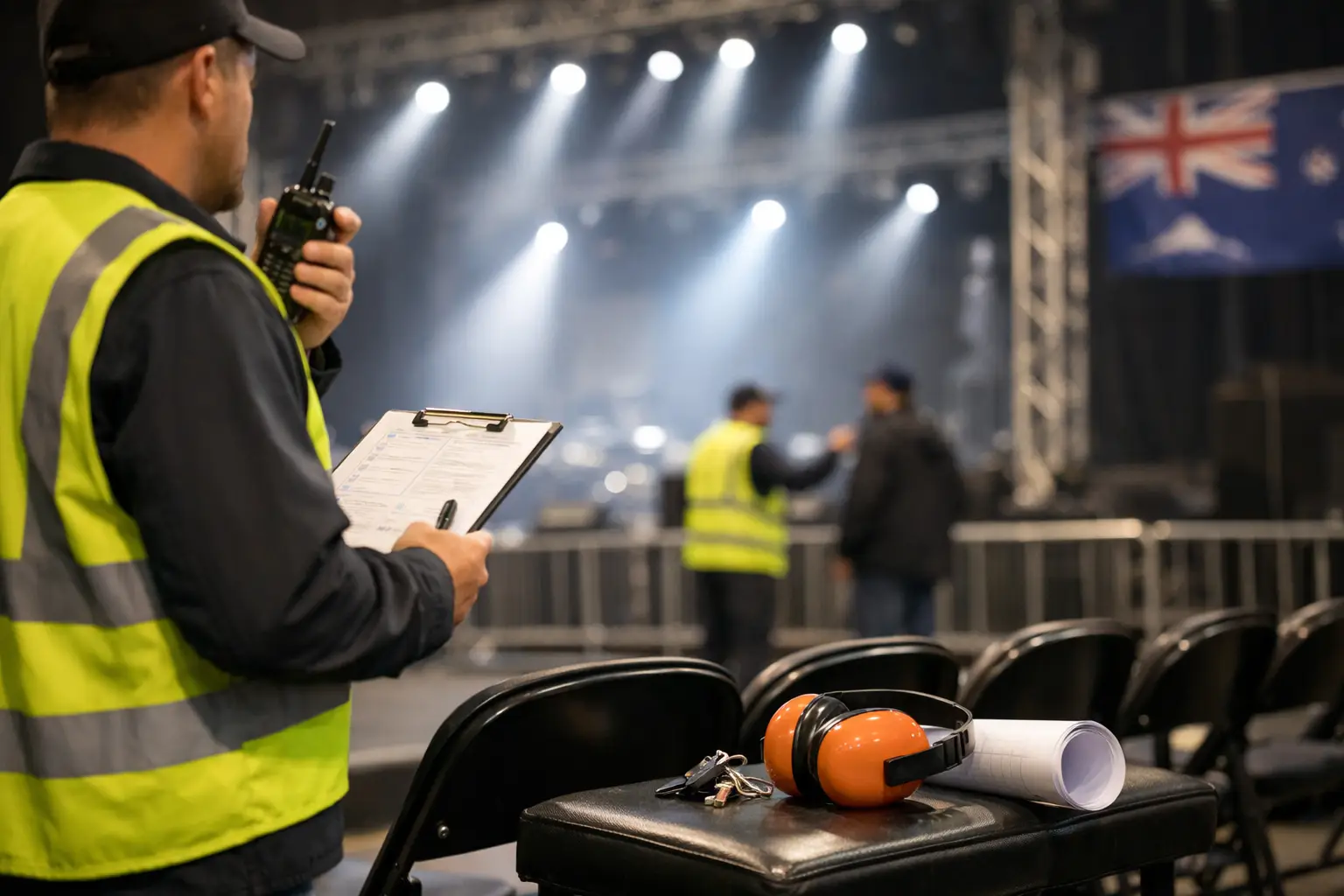
An evacuation route that looks clear on a floor plan may be compromised by production equipment, a locked gate, poor weather or an external crowd. Walk it before the event. Test radios and mobile coverage. Confirm that the incident lead has current contact details for venue management, first aid providers, contractors and emergency services.
For complex events, establish a simple incident command structure. One person should coordinate the response, while defined personnel manage communications, guest movement, access control and liaison with police, ambulance or Fire and Emergency New Zealand as required. This avoids competing instructions at the moment calm direction matters most.
Security personnel should have defined operational roles
Visible security can deter opportunistic misconduct, but personnel are most effective when they are positioned and briefed for a purpose. A guard at a door without authority, communications or situational awareness is not a security plan.
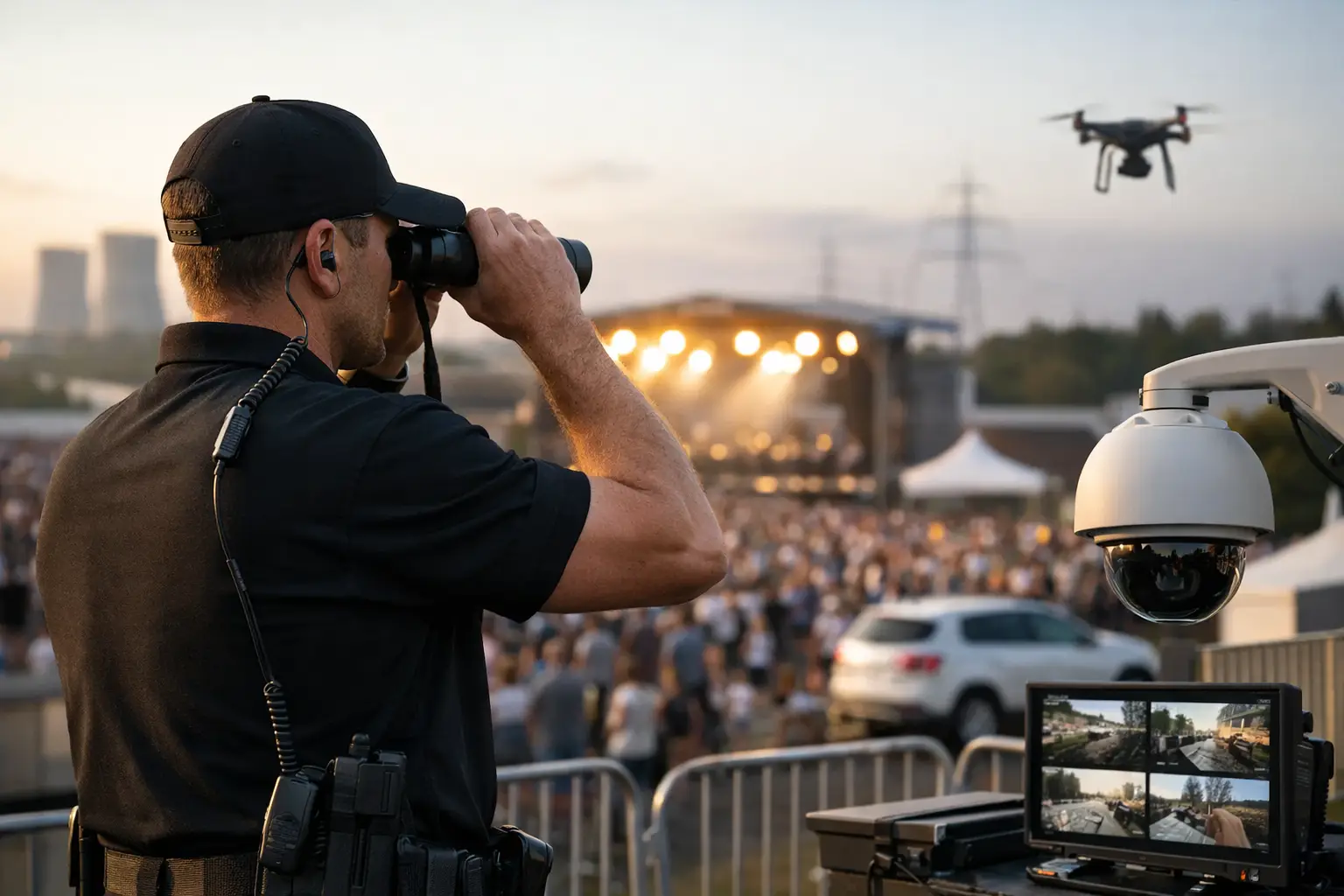
For licensed premises and events requiring crowd control, ensure the right licensed personnel are engaged and their duties align with the operational risk. Entry staff may manage identification, behavioural assessment, bag policy and refusal of entry. Internal teams may monitor crowd density, protect restricted areas, identify welfare concerns and intervene early when behaviour changes. External personnel may manage queues, vehicle access, smoking areas and safe departure.
Briefings should cover the event schedule, guest profile, prohibited items, emergency exits, radio protocols, escalation thresholds and the boundaries of each role. They should also cover service standards. Professional security is firm without being provocative. A poor interaction at an entry point can escalate quickly, harm the guest experience and create a reputational issue for the organiser.
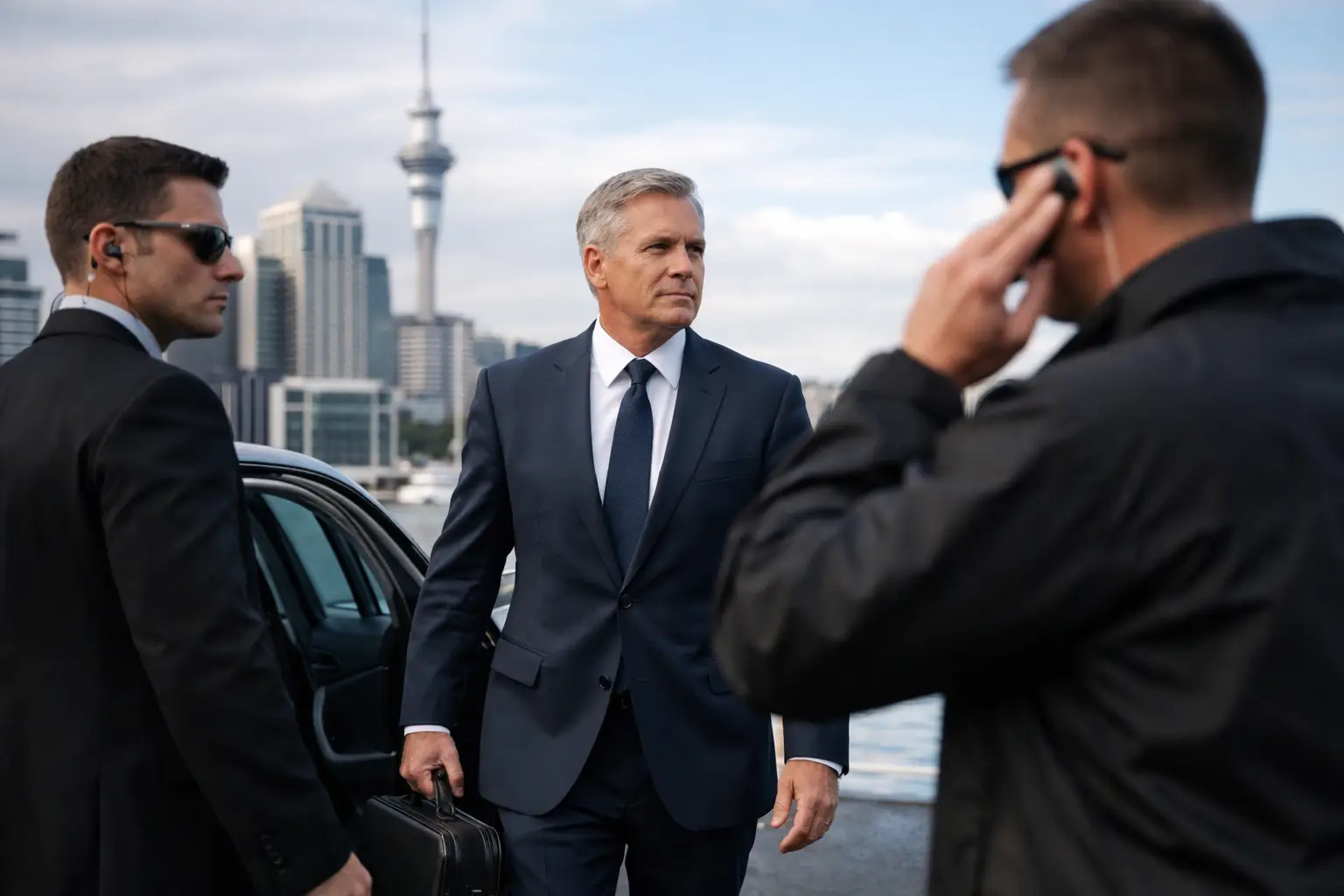
Where an event involves VIPs, public figures, contentious subject matter or a credible targeted threat, security should be integrated with protective intelligence and advance planning. This may include discreet arrival arrangements, controlled back-of-house access, route planning and protocols for managing unwanted approaches. The objective is not to make the venue feel fortified. It is to maintain privacy and operational control without disrupting the event.
Alcohol, welfare and behaviour need active management
Alcohol changes the risk profile of a venue. It can affect decision-making, increase aggression, complicate consent and make a minor incident harder to resolve. Licensed venues must meet their obligations under New Zealand liquor law, but responsible service should sit within a broader welfare plan.
Teams need confidence to identify escalating intoxication, intervene early and communicate consistently. Water availability, clear transport options, well-lit departure areas and appropriate support for distressed guests all contribute to safer outcomes. Security, bar staff and duty managers should share information promptly, particularly when a person has been refused service or asked to leave.
The same principle applies to medical and mental-health-related incidents. Not every issue requires a forceful response. Personnel should be trained to assess, de-escalate, call for clinical support where needed and preserve the dignity of the person involved. Use physical intervention only when lawful, necessary and proportionate to protect people from immediate harm.
Documentation protects the operation after the event
The event does not end when the doors close. Incident reports, refusal-of-entry records, first aid details, lost-property logs and debrief notes provide the operational record needed to improve future delivery and respond to complaints, insurance matters or formal enquiries.
Reports should be factual, timely and sufficiently detailed to explain what occurred, who was involved, what actions were taken and why. Avoid assumptions or emotive language. Where CCTV is available, confirm the relevant footage is retained in accordance with the venue’s procedures and privacy obligations.
A short post-event debrief can reveal issues that were not obvious during delivery. Were queues longer than expected? Did a particular exit create congestion? Was a radio channel unclear? Did staff have enough authority to act early? These findings turn experience into stronger controls rather than repeated exposure.
A professional standard is measured before pressure arrives
The strongest venue operations are usually the least visible. Guests experience clear entry, calm staff, orderly movement and a prompt response when help is needed. Behind that outcome sits disciplined planning, capable people and a shared understanding of who does what when conditions change.
TNG Security approaches venue protection as a coordinated risk-management function, combining licensed personnel with operational planning, intelligence-led awareness and sophisticated incident handling. For organisers responsible for people, reputation and continuity, the right preparation is not an added layer of administration. It is the condition that allows the event to proceed with confidence.
Latest Posts
Aug. 25, 2026
Best Security Protocols for Executives in NZ
Aug. 24, 2026
Venue Safety Requirements for New Zealand Events
Aug. 22, 2026
When Are Security Guards Required in New Zealand?

Aug. 22, 2026
Bodyguard Versus Executive Protection Services
Aug. 22, 2026